Top 10 Form 483 Findings in Medical Devices (2026 Update)

The FDA's new QMSR just changed the rules. Here are the 10 findings that are costing manufacturers millions, and the one most companies still aren't ready for.
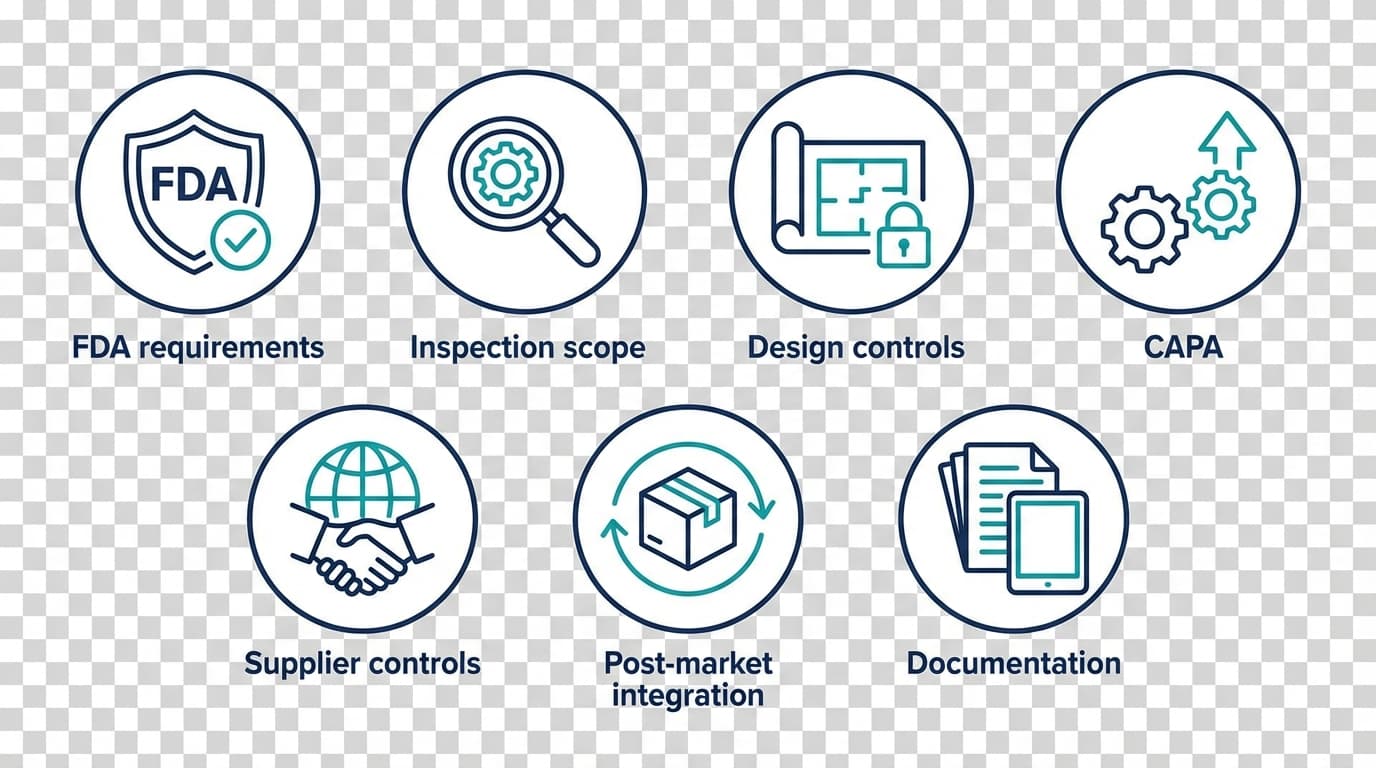
On February 2, 2026, the FDA officially retired the Quality System Regulation and its decades old QSIT inspection technique. In its place: the Quality Management System Regulation, a risk driven framework that incorporates ISO 13485:2016 into federal law and gives investigators access to records they've never been able to touch before.
Your internal audits. Your supplier audit reports. Your management review minutes.
All fair game now.
If you're a medical device manufacturer who assumed your legacy QSR compliance would carry you through, this article is the wake up call you didn't know you needed.
We've analyzed recent FDA enforcement data, Form 483 trends from 2024 to 2026, and our own findings from QMSR gap assessments across Class II and Class III manufacturers. What follows are the 10 most common, and most consequential, Form 483 observations hitting the medical device industry right now, ranked by frequency, enforcement severity, and the financial damage they cause when left unresolved.
1. CAPA System Failures | The Repeat Offender That Triggers Warning Letters
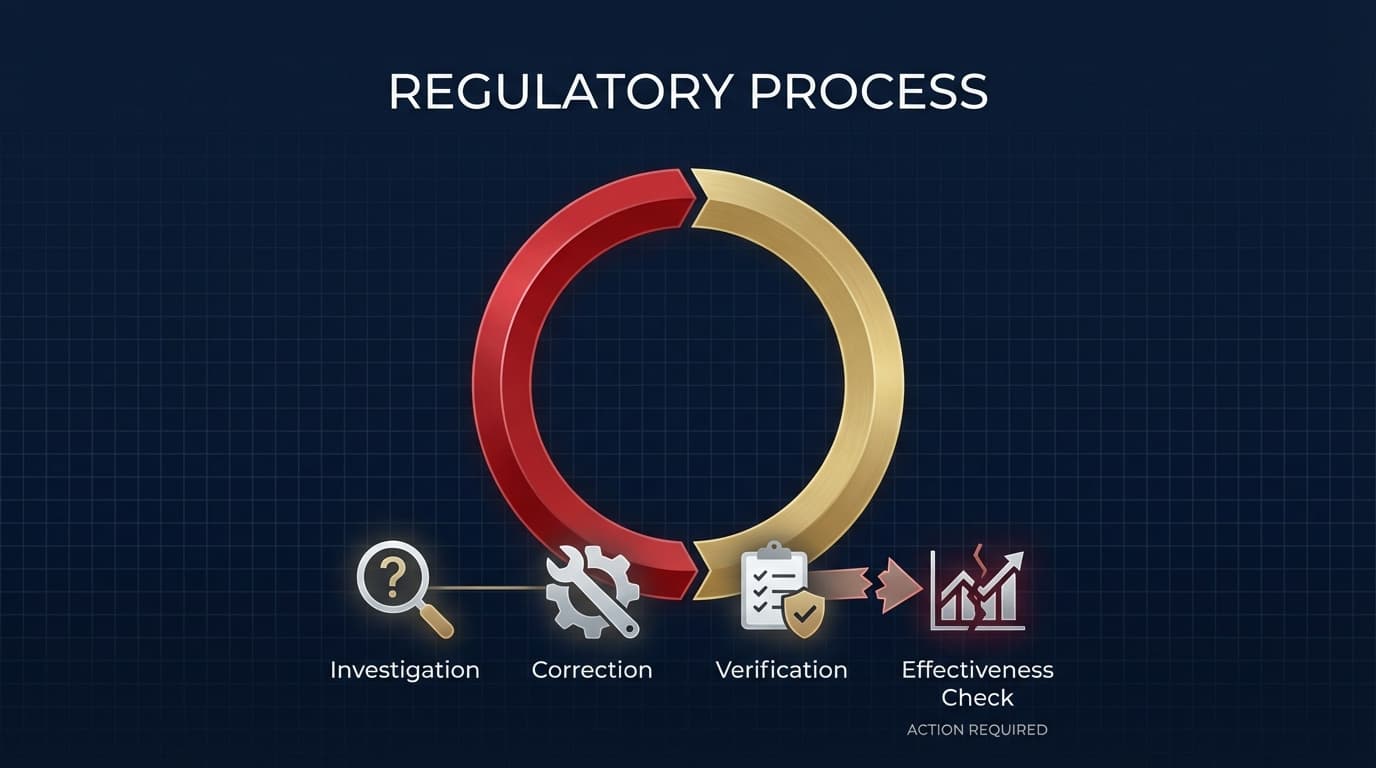
QMSR Reference: ISO 13485 Clause 8.5.2 / 8.5.3 Why it's #1: CAPA deficiencies appear in more than 60% of FDA warning letters for medical devices.
This isn't new. But under QMSR, it's worse.
The FDA is no longer just checking whether you have a CAPA procedure. Investigators are now evaluating whether your corrective actions actually work, and they have the data to prove when they don't. The agency's AI powered ELSA tool is cross referencing your complaint data, adverse event reports, and historical inspection outcomes to identify patterns you might be hoping they'd miss.
The most dangerous version of this finding? A repeat observation. If the FDA cited your CAPA effectiveness in a previous inspection and you only partially addressed it, the probability of a Warning Letter jumps dramatically.
What we see in the field: In a recent VigilaMed QMSR gap analysis of a Class III neurostimulator manufacturer, we found that 68% of their CAPAs had been closed without any documented effectiveness verification. Their 2024 Form 483 had flagged this exact issue. Partial corrections were made. The systemic root cause? Still unresolved. That's a Warning Letter waiting to happen.
What to fix now: Build an effectiveness verification methodology with defined criteria, timelines, and objective evidence requirements for every CAPA, not just the ones triggered by FDA observations.
2. Complaint Handling & MDR Reporting Gaps

QMSR Reference: ISO 13485 Clause 8.2.2 / 8.2.3 + 21 CFR 803 Why it's rising: FDA expects complaint data to be treated as a strategic safety signal, not a checkbox.
The shift is significant. Investigators are now tracing complaint spikes all the way back to design input ambiguity. They're looking for documented MDR determination criteria, not just a line in your SOP that says "evaluate reportability."
For Class III and implantable devices, having no 30 day vs. 5 day reporting decision tree is a critical exposure that virtually guarantees a Form 483 observation.
What to fix now: Create an MDR decision tree mapped to 21 CFR 803 criteria with explicit MedWatch 3500A references and timeline guidance embedded in your complaint SOP.
3. Design Control Deficiencies

QMSR Reference: ISO 13485 Clause 7.3 + ISO 14971 Why it matters more now: FDA is using postmarket signals to expose design control failures retroactively.
Here's the trend most manufacturers aren't seeing: the FDA is working backwards. A spike in complaints or adverse events gets traced back through your design history file. If they find that your design inputs were ambiguous, your risk management file was disconnected from design reviews, or your design changes over the past several years lacked formal risk reassessment, that's not a complaint handling problem anymore. That's a design control problem.
Under the QMSR's risk based inspection approach, design controls are no longer evaluated in isolation. They're evaluated in context of your entire product lifecycle.
What to fix now: Ensure your risk management file is cross referenced in every design review. Retroactively document risk reassessments for any design changes made in the past 3 to 5 years.
4. Supplier Controls | The New Inspection Battleground
QMSR Reference: ISO 13485 Clause 7.4.1 / 7.4.3 + QMSR 820.10(b) Why it's exploding: FDA can now inspect your supplier audit reports. Most manufacturers' reports won't survive the review.
This is arguably the single biggest operational change from the QMSR transition. Under the old QSR, supplier audit reports were largely shielded from FDA review. That protection is gone.
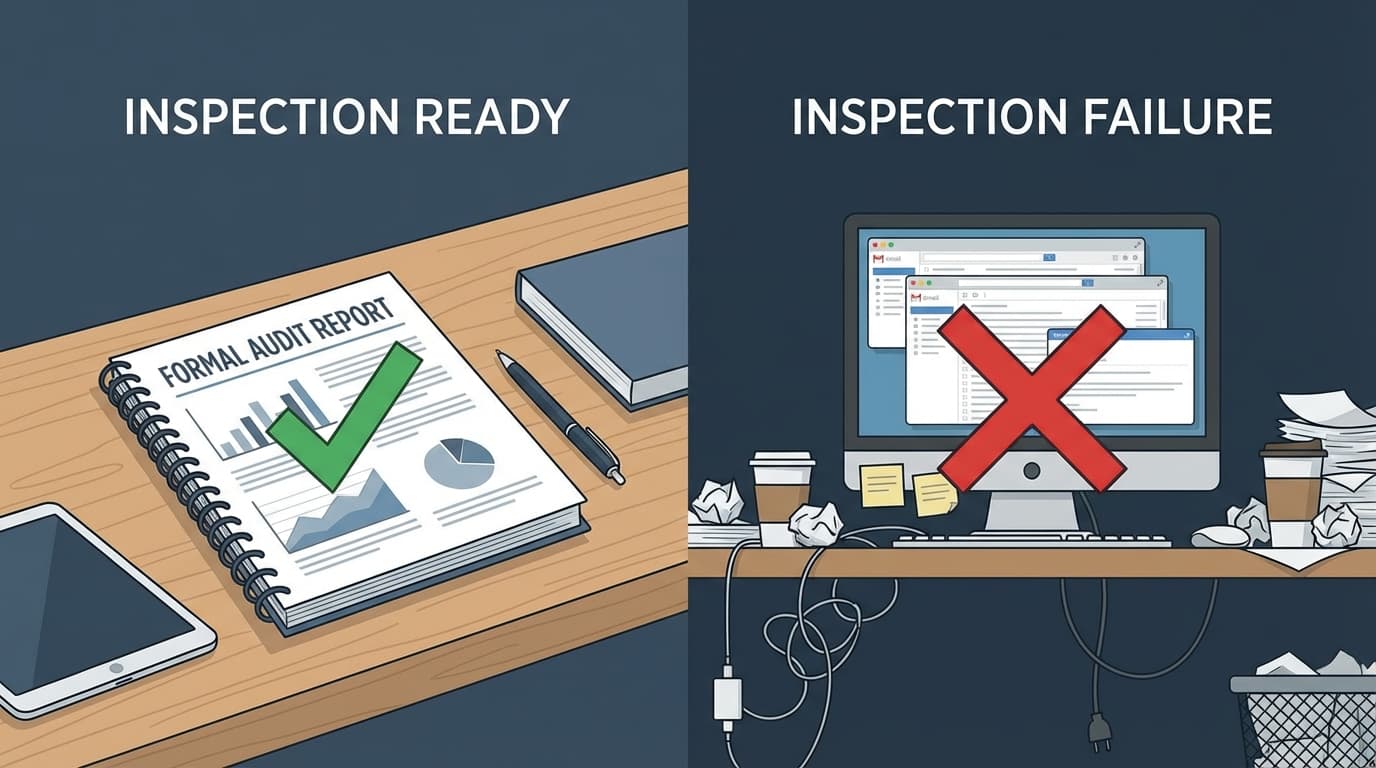
The new Compliance Program (CP 7382.850) explicitly lists supplier audit reports as elements FDA investigators can request and review. If your "audit reports" are informal email summaries or undocumented phone calls, you're handing the investigator a Form 483 observation on a silver platter.
What to fix now: Implement a risk based supplier classification system. Create formal, structured audit report templates. Prioritize your critical component suppliers, they're where the FDA will start.
5. Risk Management Failures
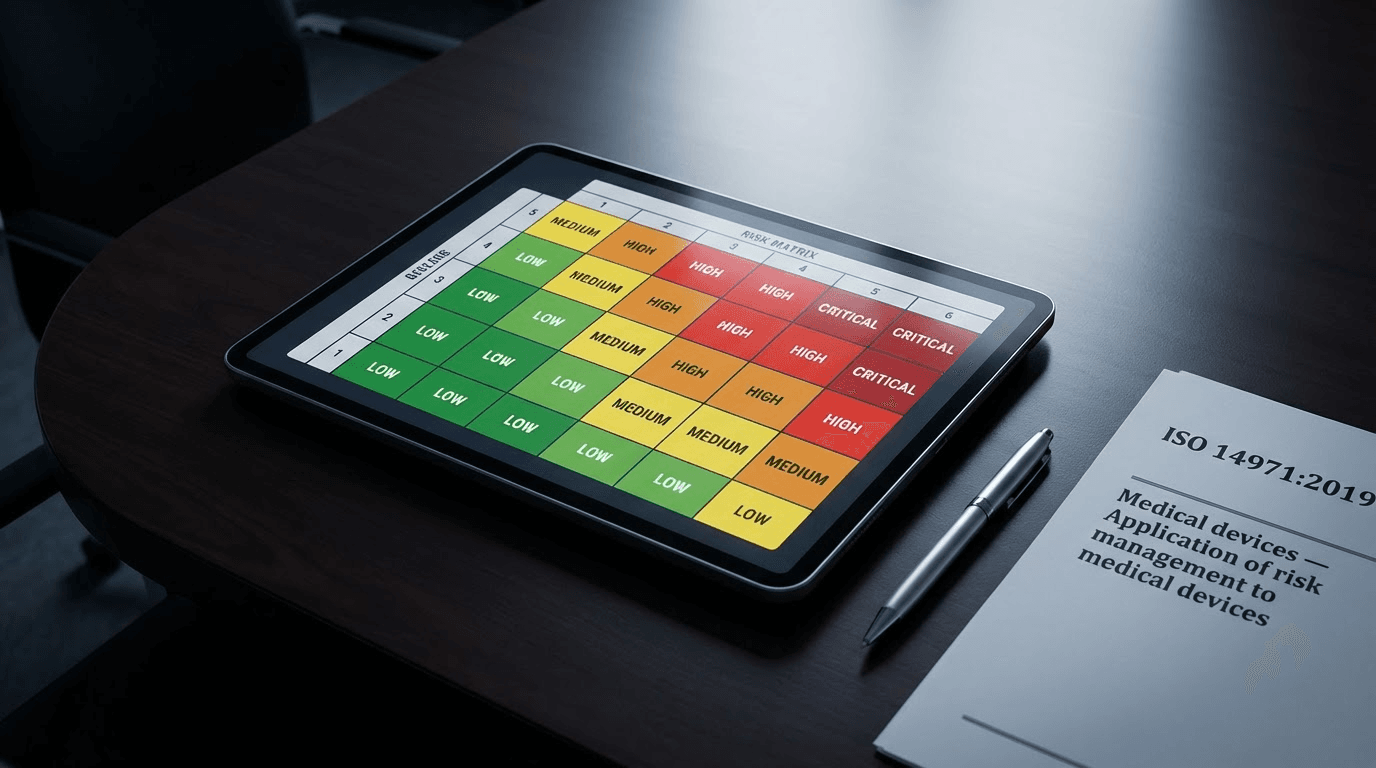
QMSR Reference: ISO 14971 throughout Why it's the new backbone: Under QMSR, your risk management documentation is the roadmap for the entire inspection.
The QMSR doesn't just reference risk management. It builds the entire inspection methodology around it. Investigators select which records to review based on identified product risks. Weak risk documentation doesn't just mean a single finding. It means a broader, more invasive inspection.
Risk management failures are also now explicitly listed as triggers for Official Action Indicated (OAI) classifications, the designation that leads directly to Warning Letters.
What to fix now: Audit your risk management file for completeness. Ensure it feeds into, and is fed by, design controls, CAPA, post market surveillance, and supplier management.
6. Internal Audit Program Deficiencies

QMSR Reference: ISO 13485 Clause 8.2.4 Why it's newly exposed: FDA investigators can now review your internal audit reports.
For decades, manufacturers could keep their internal audit findings behind closed doors during FDA inspections. That policy has been eliminated under the QMSR. FDA's updated compliance program explicitly includes internal audit reports as part of their inspection scope.
This means your internal audits need to be thorough enough to demonstrate a self correcting quality culture, but also clean enough to survive FDA scrutiny. It's a delicate balance, and most companies haven't recalibrated.
What to fix now: Update your audit checklist from the old QSR subsystem structure to the new QMSR framework. Train your internal auditors on ISO 13485 clause structure and risk based audit planning.
7. Management Review Inadequacies

QMSR Reference: ISO 13485 Clause 5.6 Why it's under the microscope: Management review records are now directly inspectable under QMSR.
Management review was always a requirement. But under QSIT, it sat within the "Management Controls" subsystem and was often treated as a formality. Under the new Compliance Program, management oversight is a full inspection area, not a background check.
The FDA is looking for evidence that leadership is actively engaging with quality data: CAPA trends, complaint analysis, post market surveillance findings, supplier performance metrics, and regulatory change impacts. If your management review minutes look like a template with boxes checked, that's a finding.
What to fix now: Restructure your management review agenda to include all QMSR required inputs. Document evidence of management decisions and resource allocation based on quality data.
8. Post Market Surveillance Gaps
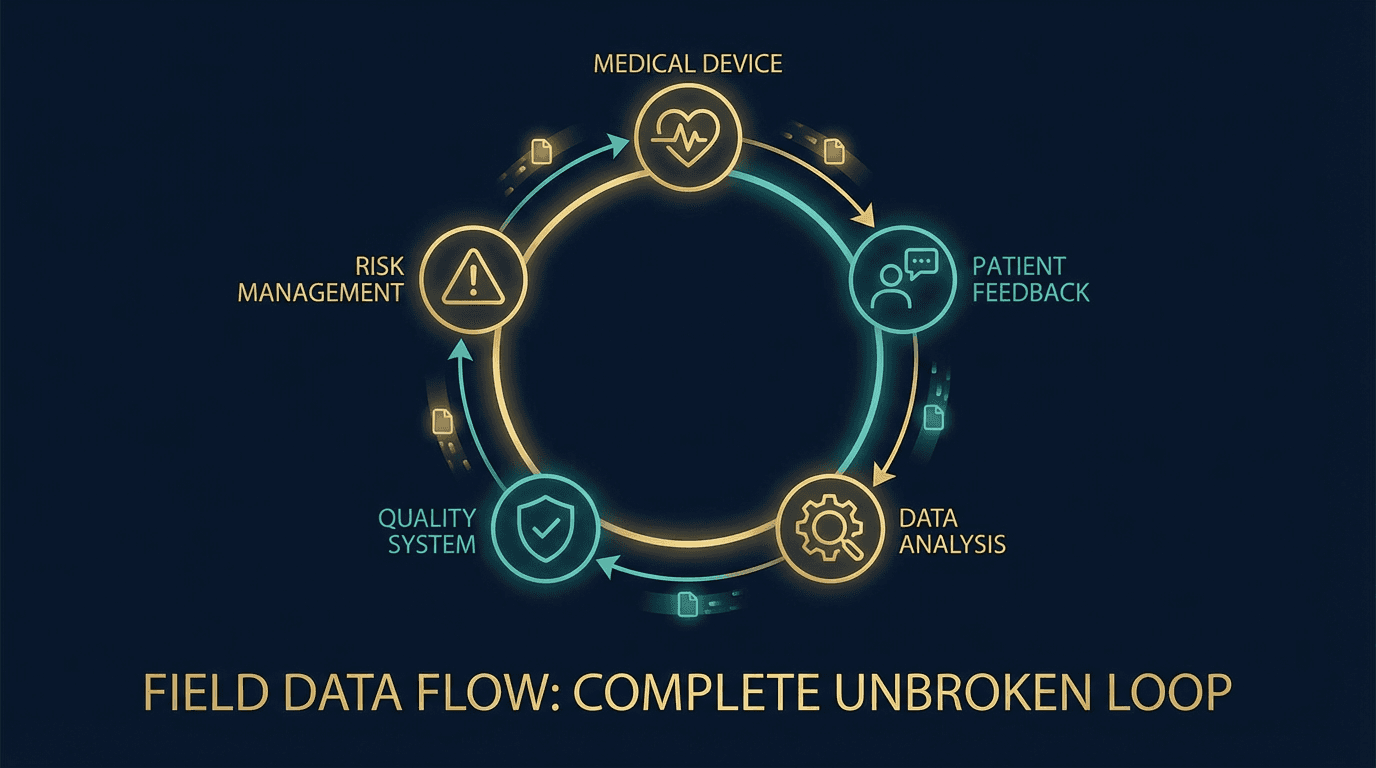
QMSR Reference: ISO 13485 Clause 8.2.1 / 8.4 Why it matters: FDA now mandates integration of PMS and lifecycle data into every inspection.
The new Compliance Program (CP 7382.850) advances a Total Product Life Cycle orientation. Post market surveillance data isn't a standalone function anymore. It must feed back into risk management, design controls, and management review.
Manufacturers who collect field data but never close the loop back to their quality system are sitting on one of the most common, and most preventable, Form 483 observations.
What to fix now: Establish a formal PMS plan with defined data sources, analysis intervals, and documented feedback loops to risk management and management review.
9. Production and Process Controls
QMSR Reference: ISO 13485 Clause 7.5 Why it persists: Process validation gaps and inadequate monitoring continue to drive findings across all device classes.
Process validation isn't glamorous, but it's relentless. FDA investigators continue to cite manufacturers for inadequate process validation studies, missing in process controls, and failure to revalidate after process changes. For manufacturers relying on contract manufacturers (CMOs), the bar is even higher. The FDA is holding sponsors accountable for their CMOs' process controls with increasing intensity.
What to fix now: Review your process validation protocols for completeness. Ensure revalidation triggers are documented and followed. If you use CMOs, confirm that your oversight mechanisms include documented controls and clear delineation of responsibilities.
10. Labeling and UDI Compliance
QMSR Reference: 21 CFR 801.20 + QMSR 820.45 Why it's climbing: QMSR 820.45 preserves FDA specific labeling and packaging requirements that go beyond ISO 13485.
Labeling observations have historically been seen as "minor." That perception is changing. The FDA is citing labeling discrepancies more frequently, particularly where device labeling doesn't match what was cleared or approved in the premarket submission. Combined with UDI compliance requirements, labeling has become a multi layered compliance challenge.
Under QMSR, 820.45 establishes specific labeling and packaging controls that remain distinctly FDA requirements, not covered by ISO 13485 alone. Manufacturers who assume their ISO certification covers this area are wrong.
What to fix now: Conduct a labeling review against both ISO 13485 requirements and QMSR 820.45. Verify UDI compliance across all device variants.
The Cost of Getting It Wrong

These aren't abstract compliance exercises. They carry real financial consequences.
When a Form 483 observation escalates to a Warning Letter, the typical cost trajectory for a medical device manufacturer includes remediation costs of $400K to $800K, production disruption losses of $300K to $600K, submission delays of $200K to $400K, and customer confidence erosion that can reach $100K to $300K. For a mid size device company, total exposure routinely falls between $1M and $2.1M.
In one of our recent engagements, a Class III manufacturer was facing exactly this scenario: 12 QMSR gaps, 4 critical findings that would have each triggered a Form 483 observation, and $1.8M in estimated regulatory exposure. We took them from 52% QMSR compliance to inspection ready in 60 days. The result? Zero 483 observations in any of the areas we addressed.
The cost of that engagement was $85K. The ROI was 21:1.
What's Different About 2026
If you take one thing from this article, make it this: the QMSR didn't just change what's required. It changed what's visible.
FDA investigators now have a risk based inspection model with no fixed sampling tables. They follow the risk where it leads. They can review your internal audits, your supplier audits, and your management reviews. They're using AI tools to identify high risk facilities before they ever walk through your door. And they're tracing post market signals back through your entire quality system to find the root cause.
The manufacturers who will thrive under this new framework are the ones who stop treating compliance as a documentation exercise and start treating it as a strategic capability.
Is Your QMS Ready?

VigilaMed's QMSR Gap Analysis assesses your quality management system against all 65 applicable requirements, identifies the findings that would trigger Form 483 observations, and delivers a prioritized remediation roadmap sequenced by FDA inspection risk.
60 day turnaround. 21:1 ROI. Built by regulatory professionals with direct FDA inspection experience.
Questions? Reach us at michelle.hilling@vigilamed.com or connect on LinkedIn.
Need help with Regulatory Compliance?
Our team of experts can help you navigate these regulatory requirements seamlessly. Book a discovery call today.
Book a Discovery Call